Static vs. Dynamic QR Codes: Which Do You Need?
In the rapidly evolving world of digital connectivity, QR codes have become an essential tool for bridging the physical and digital realms. Whether you're a small business owner, a marketing professional, or just someone looking to share information easily, understanding the difference between Static and Dynamic QR codes is crucial.
Choosing the right type can save you time, money, and frustration down the line. This comprehensive guide will break down the technical differences, pros and cons, and ideal use cases for each, helping you make an informed decision.
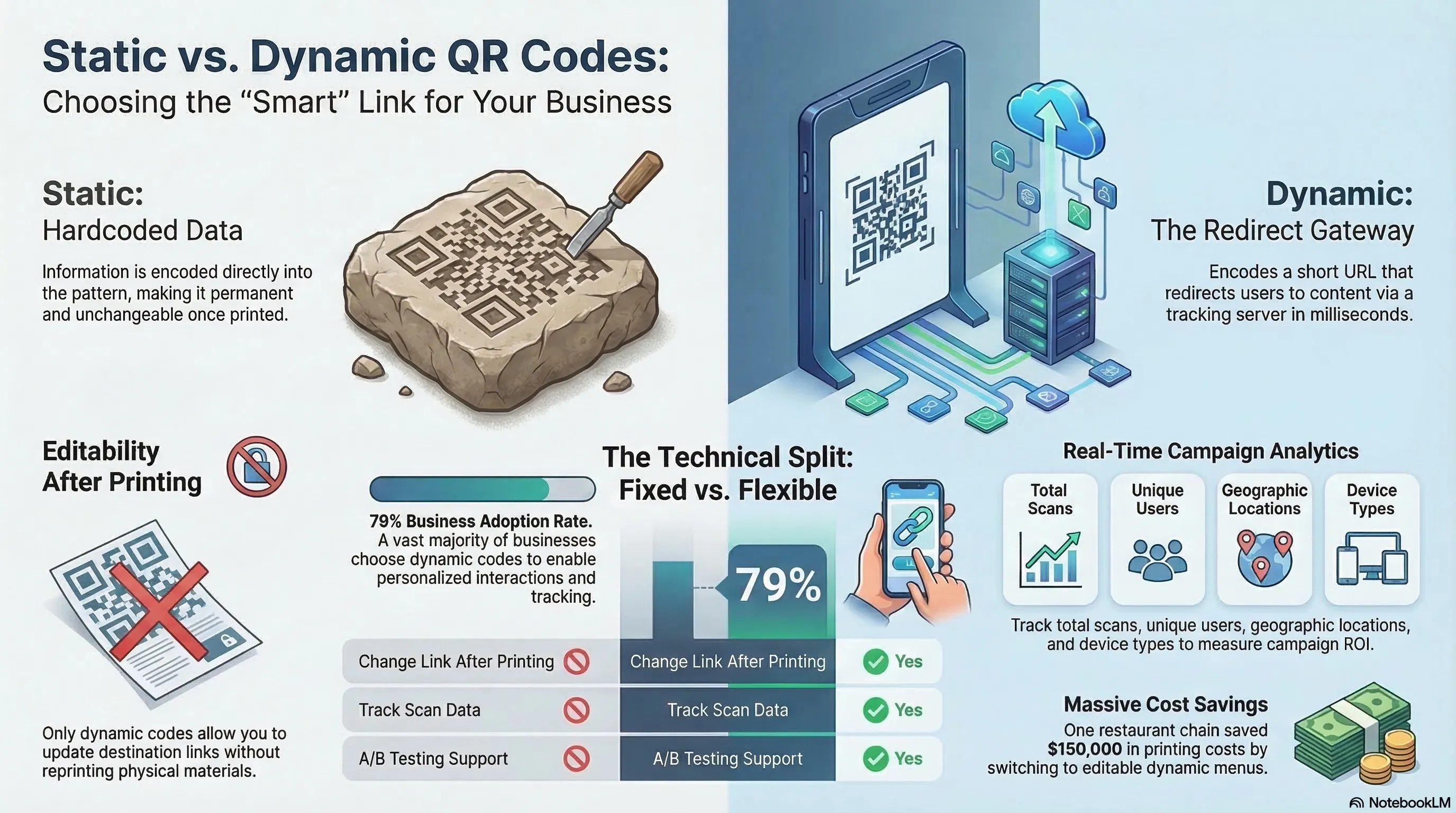
What is a Static QR Code?
A Static QR Code is the most basic form of a Quick Response code. The information you want to share—whether it's a URL, text, WiFi credentials, or contact details—is hard-coded directly into the pattern of the QR code itself.
Key Characteristics:
- Permanent Data: Once generated, the content cannot be changed. If you make a typo in the URL, you have to create (and print) a brand new code.
- No Tracking: You cannot track scanning metrics like the number of scans, location of scans, or device type.
- Offline Capability: Since the data is embedded in the code, it acts like digital text. It doesn't necessarily require an internet connection to be scanned (though opening a URL obviously does).
- Density: The more data you store, the denser and more complex the pattern becomes. This can sometimes make the code harder to scan if printed at a small size.
When to Use Static QR Codes:
- One-Time Use: Perfect for events, temporary promotions, or single-use passes.
- Personal Use: Sharing your WiFi password with guests, sharing a vCard, or sending a pre-written SMS.
- Fixed Information: Your permanent website homepage or a fixed Bitcoin address.
What is a Dynamic QR Code?
A Dynamic QR Code is a more advanced and flexible solution. Instead of storing the actual data (like your website URL) in the pattern, it stores a short redirection URL. When a user scans the code, they hop through this short link to reach your final destination.
Key Characteristics:
- Editable Content: The superpower of dynamic codes. You can change the destination URL anytime without reprinting the QR code. Did your menu change? Just update the link in the backend.
- Tracking and Analytics: Dynamic codes allow you to gather valuable data. You can see how many people scanned your code, when they scanned it, and even roughly where they were.
- Clean Appearance: Because they only store a short URL, the QR code pattern is less dense and easier to scan, even at smaller sizes or from a distance.
When to Use Dynamic QR Codes:
- Marketing Campaigns: Track the success of your ads and A/B test different landing pages.
- Restaurants & Retail: Update your digital menu or daily specials without reprinting flyers or table tents.
- Real Estate: Reuse the same sign rider for different listings by simply changing the destination link.
- Business Cards: Ensure your contact info or portfolio link is always up to date.
Comparison Table: At a Glance
| Feature | Static QR Code | Dynamic QR Code |
|---|---|---|
| Editability | Cannot change data | Edit URL anytime |
| Tracking | No analytics | Real-time scan statistics |
| Appearance | Denser pattern (more data) | Cleaner pattern (less data) |
| Lifespan | Permanent / Unlimited | Permanent (as long as service is active) |
| Best For | Personal / One-off use | Business / Marketing |
Making Your Decision
The choice ultimately boils down to flexibility and data.
If you need a simple, free solution for a permanent link or a personal project, a Static QR code is likely all you need. It’s set-it-and-forget-it technology.
However, if you are running a business, managing a campaign, or printing the code on physical materials (brochures, signs, packaging), a Dynamic QR code is the safer and smarter investment. The ability to fix a broken link or update content after printing is invaluable and can save you the cost of a reprint.
Ready to Create Your First QR Code?
Now that you know the difference, it’s time to put that knowledge into action. Whether you need a simple static code for your WiFi or a robust tool for your next campaign, we’ve got you covered.
Create Your Free QR Code Now at Linksqrcode.com