QR Codes for Retail Stores: The Complete Guide to Bridging Offline and Online
Modern retail exists in two worlds simultaneously. Customers discover products in-store but often want to compare reviews, check prices, or explore color variants online before buying. They might make a purchase in-person but prefer to be part of a loyalty program online. QR codes are the most frictionless bridge between these two worlds, making them one of the most powerful—and underutilized—tools available to independent retailers today.
The Retail QR Code Landscape
Consumer adoption of QR codes in retail surged during the pandemic and has never retreated. According to industry research, a significant majority of smartphone users in the US have now scanned a QR code in a retail environment. The key insight for merchants is that the barrier on the customer side has been removed—scanning is now a natural behavior, not something that needs to be explained. The opportunity for retailers is significant: every piece of printed material in your store is now a potential gateway to a richer digital experience.
10 High-Impact Retail Applications
1. Product Information and Reviews
Shoppers do their research. By placing a QR code next to a product display, you instantly link customers to detailed specifications, care instructions, video demonstrations, and peer reviews. This self-service information often provides the final psychological nudge needed to close a sale—without requiring a sales associate's undivided attention. For complex products like electronics, appliances, or supplements, a well-placed code can replace an entire product brochure.
2. Contactless Payments and Checkout
Speed up checkout by letting customers pay via QR code directly from their digital wallet. Platforms like Apple Pay, Google Pay, PayPal, and Venmo integrate seamlessly with QR-based payment systems, eliminating physical card readers, reducing transaction fees in some cases, and dramatically improving checkout speed. For smaller boutiques or pop-up shops where the cost of a full POS terminal is prohibitive, a simple printed QR code can enable a complete payment workflow.
3. Loyalty Program and Email Signup
Building an email list is the most valuable marketing asset a retailer can own. Instead of asking customers to fill out paper forms at the register or manually type a web address, a QR code at the counter links directly to your optimized signup page. Pair it with an immediate incentive—"Scan for 10% off today's purchase"—and conversion rates jump dramatically. A customer who joins your loyalty program is worth, on average, five times more in lifetime revenue than a one-time buyer.
4. Out-of-Stock Recovery
One of the most painful moments in retail is when a customer wants to buy something but you're out of stock. Instead of losing that sale entirely, place a QR code exactly where the empty shelf space is. When a customer scans it, they land on your e-commerce page for that specific item, where they can order it for home delivery or be notified when it's back in stock. This single tactic can recapture an enormous percentage of sales that would otherwise walk out the door.
5. How-To Videos and Tutorials
For products that require assembly or have a learning curve—power tools, kitchen gadgets, craft supplies, fitness equipment—a QR code on the product tag or packaging can link to a YouTube tutorial or branded how-to video. A customer who knows exactly how to use a product before they leave the store is far more likely to be satisfied with their purchase and far less likely to return it.
6. Customer Feedback and Reviews
Online feedback drives purchasing decisions. Place a QR code on receipts, in shopping bags, or on a small card tucked into the purchase that links directly to your Google Business page or Yelp profile. A politely worded call-to-action—"Loved shopping with us? Tell your neighbors!"—accompanying the code can significantly increase your feedback volume, boosting your local SEO and social proof simultaneously.
7. Window Displays for After-Hours Browsing
Your physical storefront doesn't need to close when you do. A high-quality weatherproof QR code on your window display allows pedestrians passing by at midnight to browse your products online, add items to their cart, or at minimum, save your website for a future visit. This turns passive window shoppers into active digital leads around the clock, without any additional staffing cost.
8. Fitting Room Assistance
Clothing retailers can place QR codes inside fitting rooms that let customers request a different size, browse complementary items (a belt to match those jeans, or a blazer to complete the outfit), or text a sales associate without leaving the fitting room. This reduces the awkward moment of cracking the door open to call for help and creates a premium, friction-free experience that larger department stores often fail to provide.
9. Event and Sale Promotions
Promote upcoming trunk shows, seasonal sales, workshops, or special events with QR codes displayed prominently in-store. The code links to an RSVP page or a special landing page with details and a countdown. Dynamic QR codes are ideal for this use case—you can print one set of signs with a permanent code but update the destination URL each month to point to whatever promotion is currently running, saving significantly on printing costs.
10. Social Media Follow Growth
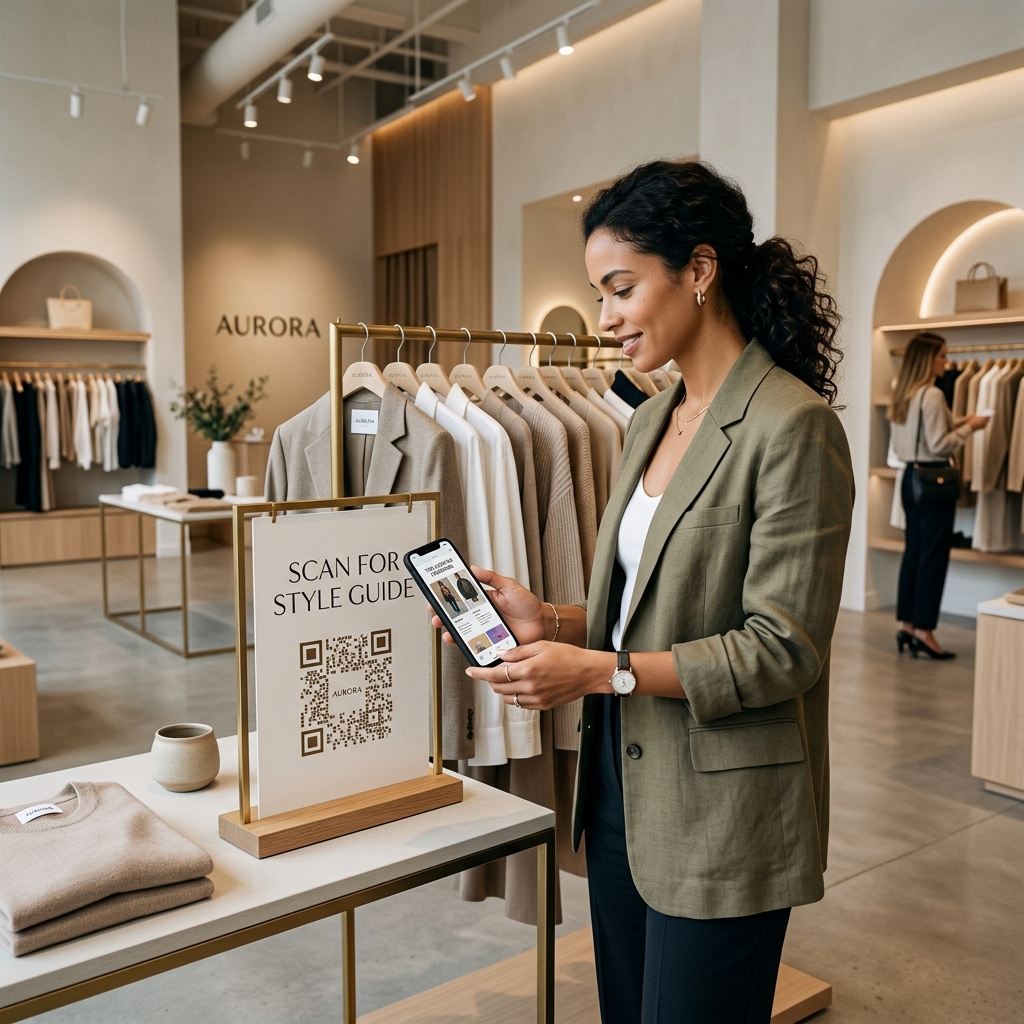
Turn satisfied in-store customers into social media followers right at the point of maximum satisfaction: the moment after a great purchase. A QR code on the receipt that links to your Instagram or TikTok profile with the caption "Follow us for exclusive deals and new arrivals" converts happy customers into a free distribution channel for every future post you make.
Best Practices for Retail QR Code Success
- Always Include a Clear Call to Action: Never place a bare QR code without context. "Scan for Feedback," "Scan to Save 10%," or "Scan to Order Online" dramatically increases scan rates by setting expectations.
- Size and Placement Matter: Codes should be at least 1.5 inches square in print and placed at natural eye level. Codes at knee height or above eye level get scanned far less often.
- Use Dynamic Codes for Changing Campaigns: For seasonal promotions and rotating content, dynamic QR codes let you update the destination without reprinting.
- Brand Your Codes: A QR code with your logo embedded builds trust and reinforces brand recognition. Customers are more likely to scan a code that matches the store's branding than a generic black-and-white square.
- Test on Multiple Devices: Before deploying at scale, scan your QR codes on both iOS and Android devices, and check that the landing page loads correctly and loads fast on mobile data—not just your store's WiFi.
Ready to Create QR Codes for Your Store?
Generate high-quality, branded QR codes with your logo embedded—entirely free, with no account needed and no data collected.
Create a Free Retail QR Code →