QR Codes for Product Packaging: The Complete Connected Packaging Guide
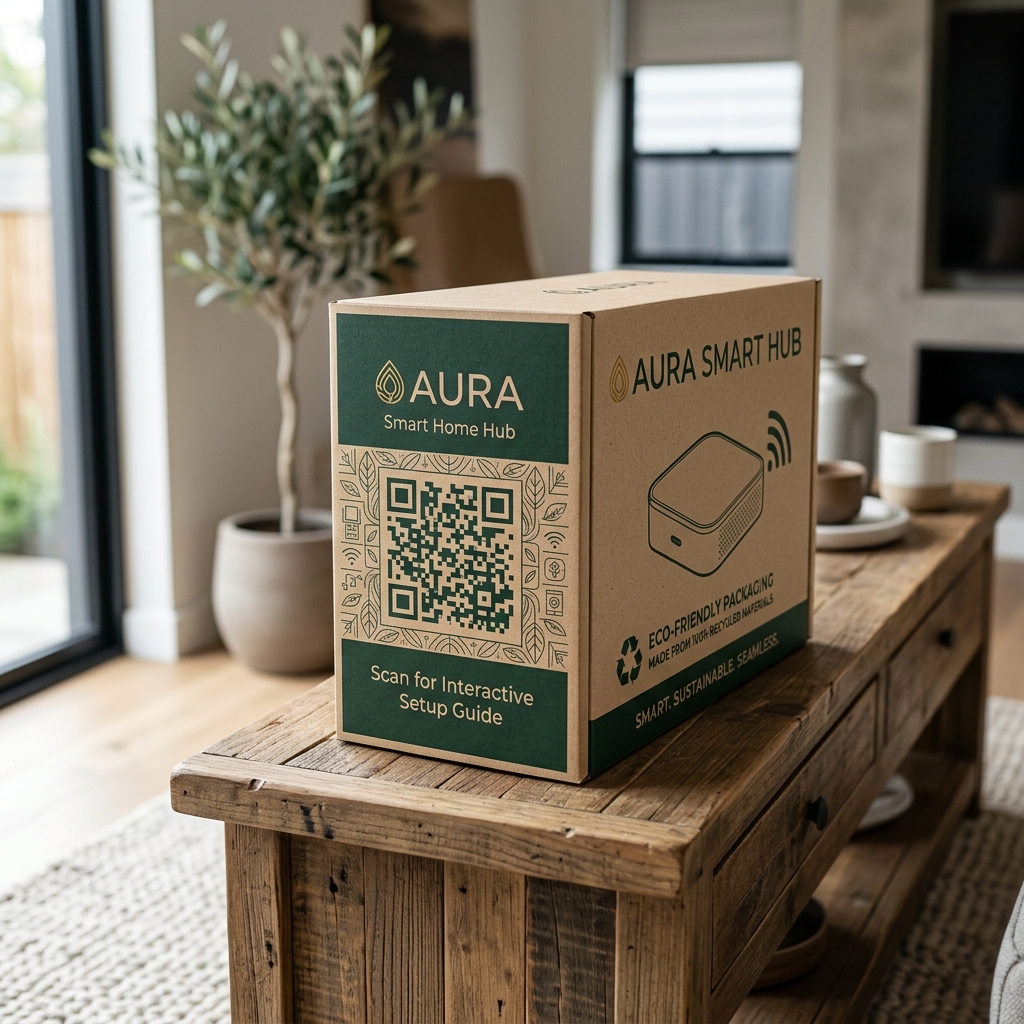
Product packaging has always been a brand's first and most intimate opportunity to communicate with a customer. But traditional packaging faces a hard constraint: physical real estate is finite. There is only so much you can print on a box, a bottle, or a label before it becomes cluttered and unreadable. QR codes eliminate this constraint entirely. A single small square becomes an infinite canvas—a gateway to rich video content, full product histories, loyalty programs, sustainability pledges, and reorder flows. This guide covers every high-value application of QR codes on modern product packaging, from independent food brands to global electronics manufacturers.
Why Connected Packaging is the Future
Consumer expectations have shifted dramatically. Modern buyers—especially Millennials and Gen Z—expect brands to be transparent about their products, responsive to questions, and committed to sustainability. They want to know where their coffee beans were grown, whether the fish they're buying was ethically sourced, how to recycle the packaging properly, and whether there's a community of like-minded people who use the same product.
Satisfying all of these expectations through printed text alone is impossible. A QR code on a label links from the physical product to a fully dynamic digital space—one that can be updated seasonally, localized by geography, or personalized by customer segment. The code itself never changes; the experience behind it is infinitely malleable.
8 High-Impact Packaging QR Code Applications
1. Supply Chain Transparency and Origin Stories
Especially in food, beverages, cosmetics, and luxury goods, provenance is a powerful selling point. A QR code on a bottle of olive oil can link to video footage of the exact farm and harvest date. A coffee bag code might reveal the altitude, processing method, and even the names of the farmers who grew the beans. For luxury goods, a QR code scan can authenticate the product and reveal its certificate of origin, fighting counterfeiting while delivering an exclusive, premium experience to the buyer.
2. Assembly Instructions and Video Tutorials
Furniture companies, electronics brands, toy manufacturers, and kitchen appliance makers spend enormous sums designing, printing, translating, and inserting multi-language instruction manuals into every box. A QR code can replace all of that with a link to a professionally produced video tutorial. The customer gets a far better experience—watching a real person assemble the product step by step—while the brand saves on printing costs and reduces landfill waste from discarded manuals. As a bonus, videos can be corrected and updated if errors are found in the instructions, without any packaging reprint.
3. Reordering and Cross-Selling
The moment a customer finishes your product, they are holding the empty container and actively thinking about whether to buy more. A QR code labeled "Scan to Reorder" on a coffee canister, a supplement bottle, or a cleaning product links them directly to your product page—ideally with the specific variant they just finished already loaded in the cart. This converts an empty container from a disposal problem into a reorder funnel. You can also rotate which cross-sell products appear based on the season, available inventory, or promotional calendar.
4. Sustainability and Recycling Guidance
Recycling rules vary dramatically by municipality—what's recyclable in one city may not be accepted in another. A QR code that links to a tool where customers enter their zip code and receive specific, locally accurate recycling instructions is vastly more valuable than a generic recycling symbol. This demonstrates genuine environmental commitment and positions your brand as a responsible corporate citizen, which is an increasingly important purchasing factor for a large segment of consumers.
5. Post-Purchase Community Building
A QR code inside the package can welcome the customer into your brand community—a Facebook Group, a Discord server, a loyalty program, or an exclusive content library. For specialty products like artisan food, outdoor gear, or fitness equipment, active communities dramatically increase customer lifetime value and turn buyers into brand advocates. The code inside the box is seen only by actual paying customers, making it a perfectly targeted activation point for your most valuable audience.
6. Nutritional Deep Dives and Ingredient Transparency
Food and cosmetics labels have limited space for ingredient information. A QR code can link to a full ingredient glossary that explains what each component is, why it's included, and its sourcing story. For growing segments of health-conscious consumers who research every compound in their skincare routine or their protein powder, this level of transparency is a major differentiator and a significant trust signal.
7. Warranty Registration and Product Support
For durable goods—electronics, appliances, tools—a QR code on the box can link to a pre-filled warranty registration form. Since the user is scanning from the product they just purchased, you can pre-populate the product model, serial number range, and purchase date automatically (or via a short form), reducing the friction that causes most customers to skip warranty registration entirely. The same code can link to the support knowledge base, reducing inbound support calls.
8. Reviews and Social Proof Collection
An insert card or packaging QR code asking for feedback—"Love it? Share your experience!"—captures feedback at the peak moment of customer satisfaction: right after unboxing. A link directly to your product's Amazon product page, Google Business profile, or a branded feedback platform converts excited new customers into social proof that influences thousands of future buyers. Brands that actively solicit feedback at the packaging touchpoint consistently outperform those that rely on email follow-ups alone.
Critical Packaging Design Considerations
- Avoid Curved Surfaces: A QR code that wraps around a cylindrical bottle can become completely unscannable. Either keep the code small enough to remain flat on the label or position it on a flat panel of the package.
- Maintain High Contrast: Printing a dark code on a dark background—navy on black, dark green on brown—will fail. Always ensure strong contrast. When in doubt, print the code in a white box inset into the label design.
- Blend Codes into the Design: A generic black QR code looks like an afterthought on a premium package. Use our custom generator to match brand colors, choose an elegant dot style, and embed your logo—making the code a design element, not an intrusion. Our halftone and photo QR modes can make a code that visually integrates with product photography.
- Use Dynamic Codes for Print Runs: If you print thousands of units, use dynamic QR codes so the destination URL can be updated without reprinting. This protects your investment if URLs change or campaigns evolve.
- Print at Minimum 1cm × 1cm: Below this size, camera autofocus struggles and scan rates drop sharply, especially in low-light retail environments. Test the final print size under actual retail lighting conditions before committing to a full run.
Build Packaging-Ready QR Codes for Free
Match your brand colors, embed your logo, and choose elegant dot styles for a QR code that enhances—rather than disrupts—your packaging design. 100% free, no account required.
Start Generating →