Securing the Scan: Advanced QR Code Security & Phishing Protection
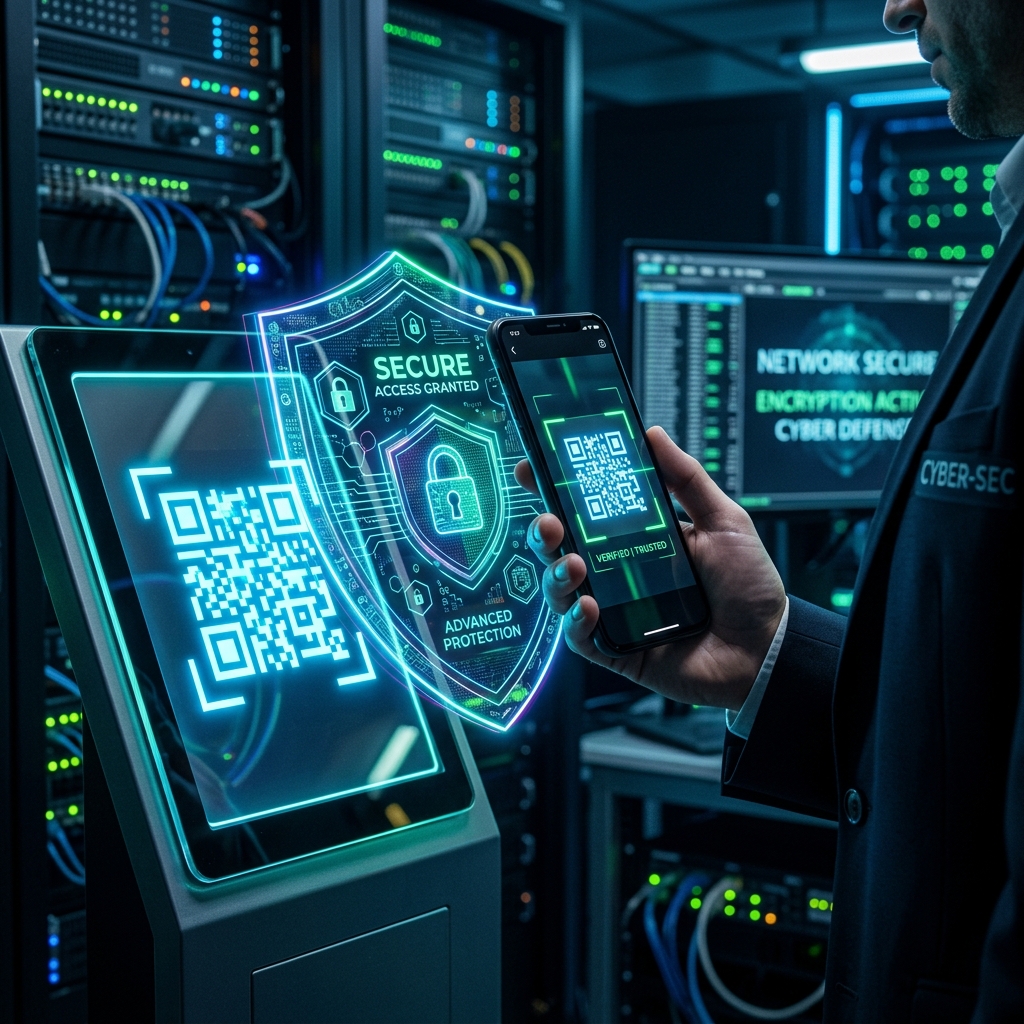
As QR codes have become the universal interface for the physical world, they have inevitably caught the attention of malicious actors. In 2026, "Quishing" (QR Phishing) has become a multi-billion dollar threat. Understanding the mechanics of QR security is no longer just for IT directors—it's a critical life skill.
The Anatomy of a "Quishing" Attack
A QR code itself is not a virus. It is simply a data carrier, much like a printed URL. However, its "invisible" nature—the fact that humans cannot read the data without a machine—makes it a perfect tool for social engineering.
In a standard quishing attack, a malicious actor overlays a legitimate QR code (for example, on a parking meter or a restaurant menu) with a sticker containing a malicious code. This code leads the user to a pixel-perfect replica of the legitimate site, designed to harvest credit card details or login credentials. Because the user has already "trusted" the physical location, their guard is down.
Advanced Threat: The Malicious Redirect
In 2026, we are seeing more sophisticated "Two-Stage" attacks. The initial scan leads to a benign, legitimate-looking "Privacy Consent" or "Age Verification" page. Once the user clicks "Allow," they are redirected to the final malicious destination. This bypasses many basic camera-app URL scanners that only check the first-hop link.
How to Protect Yourself: Always use a scanner that provides a "URL Preview." Before clicking through, look at the domain name. Does "pay-parking-city.com" match the official "city.gov/parking" instructions on the meter? If there is any discrepancy, do not proceed.
Enterprise Insight: Browser-Side Privacy
"As a Director of IS, my first rule for employees is: Never use a 'cloud-based' free QR generator for sensitive internal links. These services often log every URL you paste, creating a database of your internal infrastructure. Use a tool like linksqrcode.com that generates codes 100% in the browser. Your data never leaves your machine."
The "Middle-Man" Risk in QR Generation
Many "Free QR Code" websites operate on a bait-and-switch model. They generate a "Dynamic" code that routes your users through their tracking servers. This introduces a critical security vulnerability: if that company goes bankrupt, is hacked, or simply changes their business model, your codes could be redirected to malicious sites or advertisements without your knowledge.
This is why Static QR Codes generated locally are the gold standard for security. When you hard-code your URL directly into the QR matrix at linksqrcode.com, it is permanent. No middle-man can intercept the traffic or change the destination. It is a direct, immutable bridge between your brand and your user.
Protecting Your Brand: A Security Checklist
If you are deploying QR codes for your business, you have a responsibility to protect your customers. Follow these steps to ensure your codes are trusted and secure:
1. Use Branded Customization
Generic black-and-white QR codes are easy to fake. By using Artistic QR Styles that incorporate your brand's unique colors and logo, you make it significantly harder for a low-effort attacker to overlay a sticker without it being obvious to the user.
2. Include a Visual Verification
Next to your QR code, always print the destination URL in plain text. This allows savvy users to verify the link manually. For high-security environments, include a small instruction: "Always ensure the scanned URL starts with https://yourbrand.com."
3. Regular Physical Audits
If your codes are in public spaces, they are part of your physical security perimeter. Assign staff to perform "Touch Tests" to ensure no one has placed a sticker over your legitimate codes. A simple wipe or feel of the surface can detect a quishing overlay in seconds.
The Future of Secure Scanning: Digital Signatures
Looking ahead to 2027 and beyond, the industry is moving toward Digitally Signed QR Codes. This technology, currently being piloted by GS1, uses cryptographic hashes to prove that a code was generated by the legitimate brand. While still in its early stages, it represents the next frontier in scan security.
Until then, the best defense is education. Encourage your users to be as skeptical of a physical QR code as they would be of a link in a random email.
Final Thoughts: Privacy as a Feature
In 2026, privacy is no longer a luxury—it's a requirement. By using browser-based, static generation, you aren't just making a QR code; you're making a statement about your brand's commitment to security.
Need to generate a secure, private, and permanent QR code? Start building with our Secure QR Tool today.