Supply Chain Transparency: Using QR Codes to Track Provenance from Farm to Table
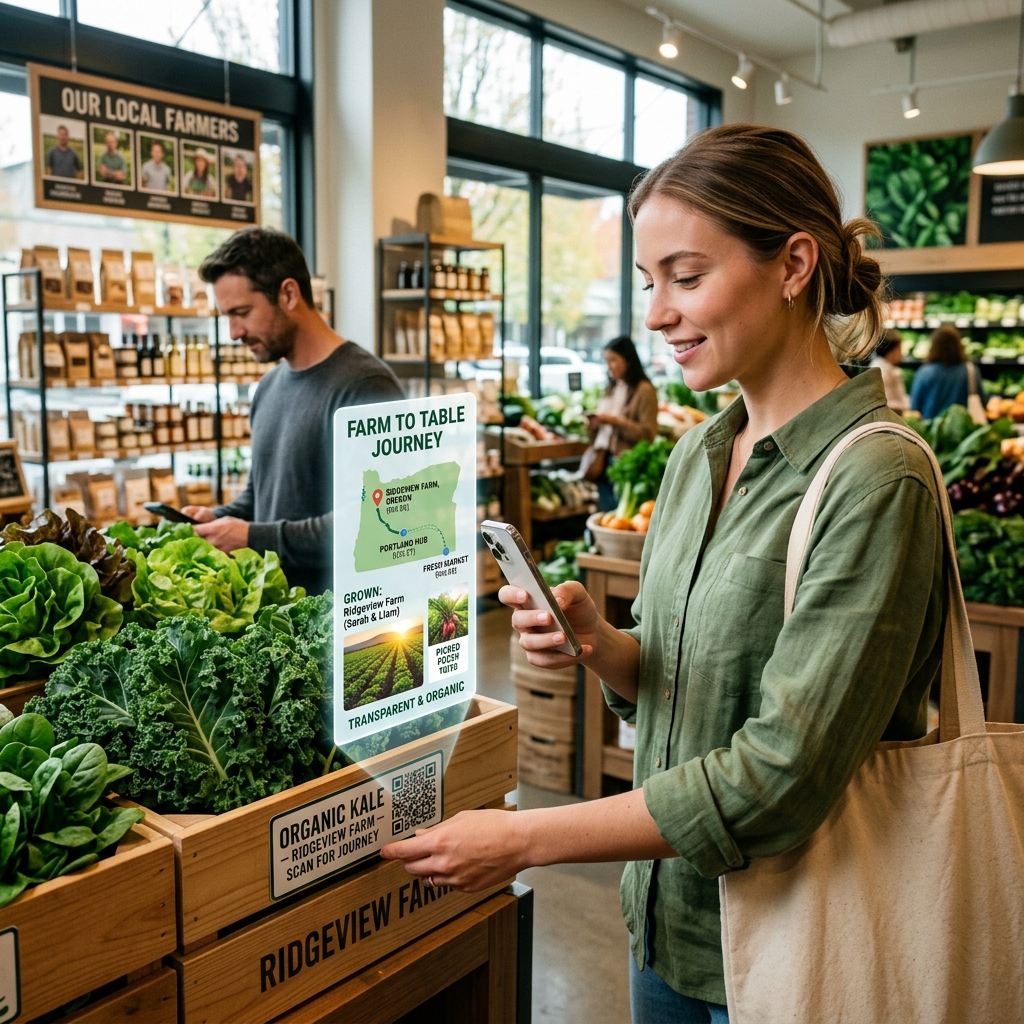
In 2026, the modern consumer is no longer satisfied with vague labels like "Organic" or "Ethically Sourced." They want proof. As global supply chains become more complex and scrutinized, QR technology has emerged as the ultimate tool for radical transparency, allowing every product to tell its unique story from the very beginning.
The "Identity" of the Product: 2D Batch Tracking
Traditional barcodes only tell a retailer what a product is. A QR code, specifically one using the GS1 Digital Link standard, can tell you exactly which batch that product came from.
For a crate of strawberries, this means a consumer can scan a code and instantly see the specific farm in Oregon where they were picked, the date of harvest, and even the temperature logs from the refrigerated truck that delivered them to the store. This Granular Traceability isn't just about curiosity; it's a vital safety mechanism. In the event of a food recall, retailers can use these unique QR identifiers to pull only the affected batches, reducing food waste by up to 80% compared to broad, "whole-state" recalls.
Building Trust Through Storytelling
Beyond safety, QR codes are a powerful vehicle for brand storytelling. High-end coffee roasters, for example, are using QR codes to bridge the gap between the morning cup and the farmer who grew the beans.
A scan can lead to a short video of the coffee plantation, details on the farm's fair-trade certifications, and even a "Direct Tip" feature where consumers can send a small digital gratuity directly to the farming cooperative. This Human-Centric Transparency transforms a commodity into a connection, building deep brand loyalty that labels alone can never achieve.
Manufacturer Tip: Secure Provenance
"When implementing supply chain QR codes, ensure they are tamper-evident. Top manufacturers are now using Encrypted QR Modules that contain a unique cryptographic signature. If the code is copied or redirected to a non-authorized site, the scan will fail, alerting the consumer that the product's provenance cannot be verified. This is the gold standard for luxury goods and high-value pharmaceuticals in 2026."
Sustainability and the Circular Economy
As "Extended Producer Responsibility" (EPR) laws become more common, companies are using QR codes to manage the entire lifecycle of a product.
- End-of-Life Instructions: A scan can tell a consumer exactly how to recycle or compost the packaging in their specific zip code.
- Repair Manuals: For electronics and appliances, a QR code etched into the chassis leads directly to a "Right to Repair" portal with part diagrams and official repair guides.
- Resale Authenticity: High-end fashion brands use unique QR "Digital Passports" to verify the authenticity of a garment in the secondary resale market, ensuring the brand's value remains intact.
The Logistics Advantage: Real-time Inventory
Logistical efficiency is the backbone of transparency. QR technology allows for Autonomous Inventory Management. As crates move through a warehouse, ceiling-mounted scanners automatically read the QR codes, updating the global inventory database in real-time without human intervention.
This eliminates the "Black Box" of traditional shipping. Manufacturers, retailers, and even consumers can see exactly where a product is in the journey. This level of visibility reduces "shrinkage" (theft and loss) and allows for a more agile, "Just-in-Time" supply chain that responds instantly to consumer demand.
The "Scan for Impact" Movement
The latest trend in 2026 is the Environmental Impact Score. Many progressive retailers are including a QR code on receipts or shelf tags that shows the carbon footprint of the specific items in the cart.
By scanning, consumers can see a breakdown of the water usage, CO2 emissions, and transportation distance for their purchase. This empowers the "Conscious Consumer" to make data-driven decisions at the point of sale, driving the entire industry toward more sustainable practices.
The Verdict: Transparency is the New Luxury
In the information age, secrets are a liability. QR codes provide the most efficient and scalable way for companies to be radically honest with their customers. In 2026, transparency isn't just a marketing buzzword—it's the foundation of modern commerce.
Ready to give your products a digital voice? Create your high-transparency Supply Chain QR System for free at linksqrcode.com.