QR Codes in Logistics: Optimizing the Modern Warehouse and Last-Mile Delivery
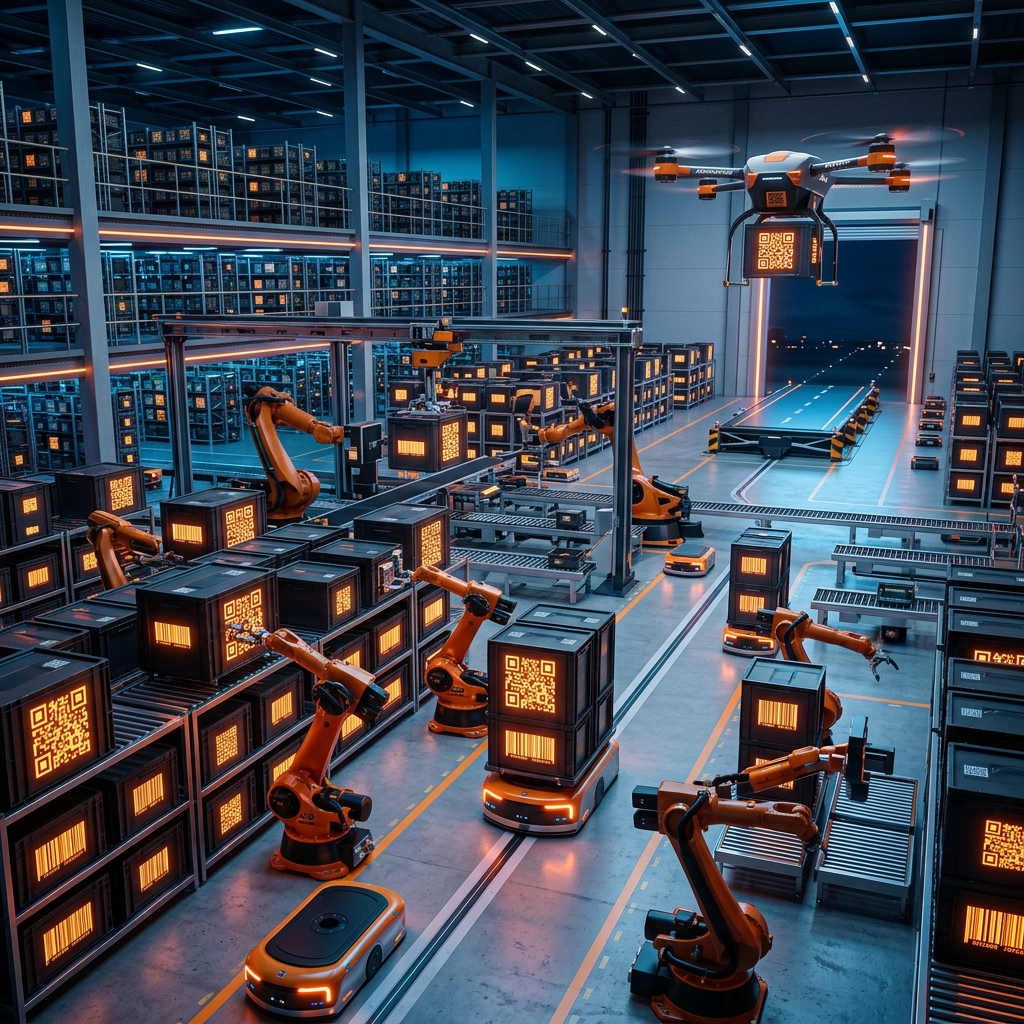
In the hyper-accelerated economy of 2026, speed is the only currency that matters. From the cavernous aisles of automated warehouses to the "last-mile" doorstep delivery, the humble QR code has evolved into a high-performance data anchor. It is the bridge between physical assets and the digital logistics cloud, enabling a level of efficiency and transparency that was unimaginable a decade ago.
The Smart Warehouse: QR as a Robotic Nav-Point
Walking into a top-tier fulfillment center in 2026, you won't see many humans with clipboards. Instead, you'll see a fleet of Autonomous Mobile Robots (AMRs) and robotic picking arms. For these machines, QR codes are the primary way they "see" the world.
Every shelf, bin, and pallet is marked with a high-durability QR code. When an order is placed, the central AI dispatches a robot to a specific coordinate. The robot scans the shelf QR to verify its location and then the bin QR to ensure it is picking the correct item. This Double-Verification Loop has reduced picking errors to near-zero, saving large-scale operators millions in return costs and lost productivity. At linksqrcode.com, our Industrial-Grade QR Generators are designed to produce high-contrast modules that robots can read in microseconds, even in low-light environments.
Real-Time Inventory: The End of "Out of Stock"
Traditional inventory management relied on periodic manual counts—a process that was slow, expensive, and prone to error. In 2026, inventory is "live."
As goods move through the warehouse, overhead scanners automatically capture their QR codes. This data is instantly synced to the global inventory management system. If a product's stock level hits a pre-defined threshold, the system automatically triggers a re-order from the manufacturer. This Autonomous Replenishment ensures that retailers never miss a sale due to an "out of stock" notification, while also preventing the costly overstocking of slow-moving items.
Logistics Insight: The Dynamic Bill of Lading
"The traditional paper Bill of Lading (BoL) is dead. In 2026, every shipment is assigned a Dynamic QR Passport. Scanning this code gives drivers, port authorities, and customers real-time access to the shipment's contents, customs documentation, and temperature logs. Because the code is dynamic, the BoL can be updated mid-transit if the delivery address changes or if a specific item is rerouted."
Frictionless Last-Mile Delivery
The "Last Mile"—the journey from the local hub to the customer's door—is the most expensive and complex part of the supply chain. QR codes are streamlining this final leg in three key ways:
- Smart Lockers: Instead of leaving packages on porches where they are vulnerable to theft, couriers place them in secure neighborhood lockers. The customer receives a one-time-use QR "Key" on their phone to unlock the locker at their convenience.
- Proof of Delivery (PoD) 2.0: Instead of a messy digital signature, couriers scan a QR code on the customer's door or a unique code on the package once it is placed in a secure zone. This provides a timestamped, GPS-verified record of delivery that is 100% dispute-proof.
- Instant Returns: Returning a product used to be a headache. Now, customers simply select "Return" in their app, which generates a QR code. They drop the item off at a local hub, the hub scans the phone, and the refund is processed instantly. No printing labels required.
Cross-Border Efficiency and Customs
Global trade is faster than ever thanks to Electronic Data Interchange (EDI) via QR. When a container reaches a port, customs officials scan a master QR code that contains all the necessary manifests, duties paid, and security clearances. This "Green Lane" scanning allows cargo to bypass hours of manual paperwork, significantly reducing port congestion and overall shipping times.
The Future: QR and the IoT Web
The next frontier is the integration of QR codes with the Internet of Things (IoT). In the coming years, we will see "Active QR" codes—digital modules that change in real-time based on sensor data. A QR code on a pharmaceutical package might turn red if the internal temperature exceeded safe limits, immediately alerting the logistics provider to pull the product from the line.
The Verdict: The Invisible Engine of Commerce
Logistics is often invisible when it works well, and QR codes are the invisible engine driving that success. By providing a low-cost, high-reliability way to identify and track every single item in the global supply chain, QR technology is making the world smaller, faster, and more efficient.
Ready to optimize your warehouse? Build your own Industrial QR Ecosystem for free at linksqrcode.com.