QR Codes in Education: Bridging the Gap Between Textbooks and Digital Learning
The classroom of 2026 is no longer confined by the four walls of a building or the static pages of a textbook. As education becomes increasingly hybridized, the QR code has emerged as the essential bridge between physical learning materials and the vast world of digital resources. By making static content interactive, QR technology is boosting student engagement and personalizing learning at scale.
The Living Textbook: AR and Video Integration
For decades, textbooks have suffered from a major flaw: they are out of date the moment they are printed. In 2026, forward-thinking publishers and educators are using QR codes to create "Living Textbooks."
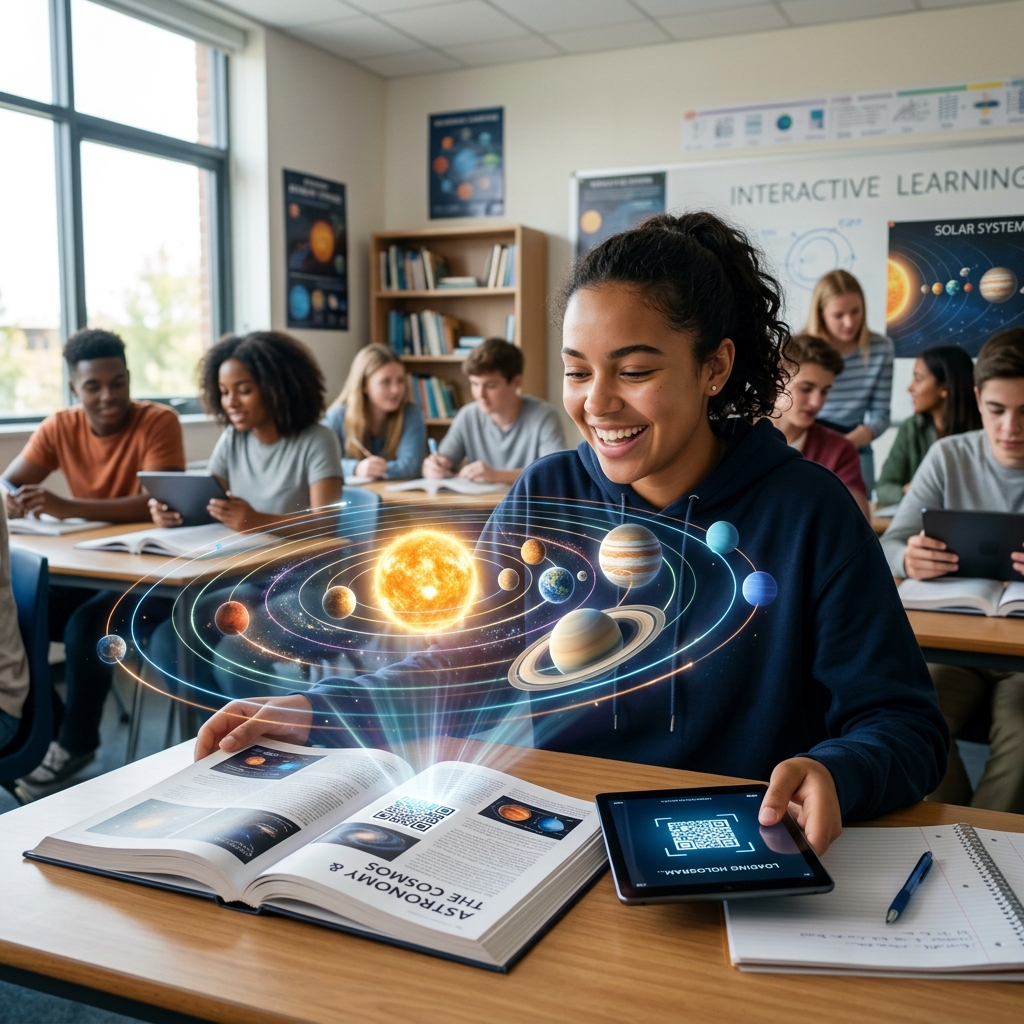
Imagine a student reading about the solar system. By scanning a QR code on the page, they don't just see a diagram—their tablet triggers an Augmented Reality (AR) overlay of the planets orbiting the sun. Or, a student struggling with a complex calculus equation can scan a code next to the problem to instantly watch a 60-second video walkthrough from their teacher. This Just-in-Time Support ensures that students don't get stuck, even when studying independently at home.
Streamlining the Paper-to-Digital Workflow
The "Paperless Classroom" has been a goal for years, but the reality is that physical worksheets and notes still have cognitive benefits. QR codes provide the perfect middle ground for managing assignments.
Teachers now include unique QR codes at the top of physical worksheets. When a student finishes their work, they scan the code to instantly upload a photo of their completed assignment to the class's Learning Management System (LMS). This eliminates the "Lost Homework" excuse and gives teachers a digital record of physical work without the need for manual scanning or data entry.
Teacher Tip: Classroom Scavenger Hunts
"One of the most effective ways to use QR codes is for active learning. Place QR codes around the school or classroom that lead to clues, primary source documents, or short quizzes. This movement-based learning increases retention and makes even dry subjects like historical dates feel like an adventure. At linksqrcode.com, we recommend using high-contrast, colorful QR designs to make them easy for kids to find and scan."
Accessibility and Differentiation
One of the most powerful applications of QR technology in education is for students with diverse learning needs. QR codes allow for Tiered Learning without stigmatizing students.
For example, a teacher can provide a list of reading materials where each title has three QR codes next to it: one for an audio version of the text, one for a simplified vocabulary guide, and one for a deep-dive analysis. Students can scan the code that matches their current level of understanding or physical need. This discreet differentiation allows every student to access the curriculum at their own pace, fostering a more inclusive classroom environment.
Interactive Bulletin Boards and Portfolios
The school hallways are being transformed by "Scannable Portfolios." Instead of just pinning a painting or a poem to a bulletin board, students now attach a QR code that leads to an audio recording of them explaining their creative process or a time-lapse video of the work being created.
This turns a static display into a dynamic gallery, allowing parents and peers to engage more deeply with the student's journey. It also teaches students valuable digital literacy and curation skills that are essential in the 2026 workforce.
Safety and Logistics: The QR Hall Pass
Logistical efficiency is the backbone of a well-run school. Many modern institutions have replaced traditional hall passes with QR systems.
A student scans a code by the door as they leave, which logs their departure time and destination in a central dashboard. Upon return, they scan again. This provides real-time visibility for administration in case of emergencies and reduces the administrative burden on teachers to track student movement manually.
The Verdict: Empowering the Next Generation
Education is about connection—connecting students to ideas, to their teachers, and to each other. QR codes are the most versatile tool for making those connections seamless and engaging. In 2026, the question is no longer whether to use QR codes in the classroom, but how creatively they can be applied to unlock student potential.
Are you an educator looking to bring your classroom into the future? Create your first set of Interactive Classroom QR Codes for free at linksqrcode.com.